Current Issue
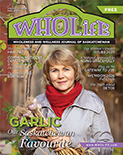
Volume 32 Issue 3— Fall 2026
 The Science Behind the Sweetness – Gardening in Cold Climates The Science Behind the Sweetness – Gardening in Cold Climates
by Stacey Tress
I wonder what the projections are for first frost dates here in the Yorkton and surrounding area – this is my inspiration for this article. We had a late start to the growing season here, due to heavy June moisture and cold soil temperatures. According to the Canadian Hardiness Zones map, Yorkton is 2b, with 3b microclimates. Another plant hardiness map has Yorkton fully as zone 3b – which really has to do with the average cold temps and length of growing season. We are definitely classified as a cold climate, and can use this in our favour when it comes to many vegetables. Essentially, the cool weather unlocks a hidden superpower in root vegetables. As temperatures fall to 32–40°F (0–5°C), they trigger cold sweetening—a survival strategy that converts starches into sugars. These sugars protect plant cells from freezing like a natural antifreeze, while also giving carrots, parsnips, beets, and turnips their irresistible winter sweetness. There’s another sweetening called cold acclimation. The sweetness also doesn't happen by accident. As the days shorten and the nights turn colder, hardy vegetables know winter is on its way. They begin a remarkable survival process also referred to as hardening – this application again, perfect for cold climate gardening, but not just for root vegetables; includes cold hardy vegetables like kale, bok choy, Brussels sprouts, spinach, and parsley.
Read the article
Planting Seeds of Peace with the Patterson Garden Arboretum
by Nancy Tam
You’ve likely driven by the Patterson Garden Arboretum (the Arboretum) in Saskatoon umpteen times without knowing it. It is a lovely hidden gem in our city that is nestled behind a treeline and thick shrubbery at the southeast corner of College Drive and Preston Avenue near the University of Saskatchewan (U of S). In the summer of 2024, the Positive Peace Umbrella Project was born with a dream vision of seeds being planted in Saskatoon; special seeds from the sacred trees that survived the atomic bombings of Hiroshima and Nagaskai, on August 6 and 9 in 1945. There are about 170 sacred trees (from 32 species) that survived the tragic A-bombing, called Hibakujumoku. These sacred trees carry the double message of cautioning about the horrors of nuclear weapons and radioactive waste, while also inspiring us about the enduring power of the human spirit and the resilence of nature.
Read the article
Support for Autumn, Getting Back to Routine After Summer – September 2026
by Pam Fichtner
Summer is a time to relax, break out of the normal flow of daily activities, a much needed time to do something differently, if we have the opportunity to do so. Going camping, or a day trip to your favourite spot, or to a festival, may just be the activity to invigorate you! Even a staycation can be good – a local park for a BBQ with friends. But then it ends. We enjoy it, soaking up the memories spent outdoors with friends in the sun, but there's a time for each season, as the song goes, Turn, Turn, Turn, To Everything there is a Season. Autumn begins in September, when most of the summer activities are just finishing – the boats are in, the trips are done. People are getting ready for this change. We are lucky to live in a province where there are distinct seasons, so we can feel and be witness to the changing environment around us.
Why We Built the CHANGE Coach Accelerator™
by Abe Brown, MBA, M.Ed/C,
Over the past two decades, I've had the privilege of coaching leaders, executives, entrepreneurs, HR professionals, employment specialists, pastors, educators, healthcare professionals, and aspiring coaches from all walks of life. Through thousands of coaching conversations, one pattern became impossible to ignore. People wanted coaching skills. Not because they all wanted to become full-time professional coaches, but because coaching has become one of the most valuable leadership skills anyone can possess. The challenge? Most simply didn't have the time—or the budget—to invest in a long, expensive certification program.
What’s Soul Got to Do With It?
by Laura Walter
It’s a familiar story. We wake in the morning with little motivation to participate in our lives. We are exhausted; a sense of dread already settles in our stomach and chest. There are responsibilities we cannot forsake, people we love who depend on us, and bills that must be paid, so we get up. We seek support from friends, doctors, and counsellors. We learn helpful tools, and yet… Yet we cannot move beyond the suffering. A quiet but piercing voice continues to whisper, Something is wrong with me. We search for the answer, the solution, the person who will finally eliminate this pain.
The Effects on Humans of Having an Ongoing Interdependency with Nature
by Moira Theede
Today is July 12th, 2026. In Saskatchewan, many people have experienced distress caused by severe storms (hail damage and high winds, flooding, and tornados in the past two weeks). An Australian philosopher and environmentalist created new English words to describe the “distress we experience caused by environmental change” and disasters. Glen Albrecht is a former Associate Professor (School of Environment and Life Sciences, University of Newcastle, Callaghan, NSW, Australia). At an EcoHealth Conference (2003) in Montreal, Canada, he presented for the first time his term “solastalgia." After spending years studying the effects on people who experienced severe drought in SE Australia, and/or lived close to open-cut coal mining in New South Wales, he created the term solastalgia "to describe place-based pain and distress related to one’s home." The chronic environmental stressors create a heavy burden as “solastalgia exists when there is the lived experience of the physical desolation of home." When I first discovered Albrecht’s work in ecology texts in 2014, I was glad to see new words to expand our vocabulary to articulate loss and grief with new words and concepts.
Editorial
by Melva Armstrong
Welcome to the autumn/fall edition of WHOLifE! It's a very beautiful time of year! I believe we have a lot to be grateful for in our part of the world. There are so many unusual events going on globally, that I feel comfortable and peaceful living in our province. I was born and grew up here, and although I have travelled and lived away, Saskatchewan has always felt like a safe, friendly, and welcoming place. Our spring took a long time to arrive and then our summer had its ups and downs weather-wise. We had the big rainfall across an extensive land area on June 30, and our home was not spared when the water coming down was so great, that it had no where to go but into basements. Hundreds of homes and business buildings had flood water damage. Our home basement is very slowly being rebuilt and yet it's still quite a long process, due to an insufficient number of builders and rebuiders in the huge area that was damaged. I would say it has been a stressful time, with our routine home life turned upside-down. On the other hand, this could be a way to help us clear some of our clutter. I believe there's always something good in everything that happens to us.
Read the editorial
Plus:
The Important Role of Phytonutrients and Dietary Fibres
Nurturing Yourself During the Grocery Crunch
Circle Art, Mandalas, and Intentions
News of Note
Recent Issues
|